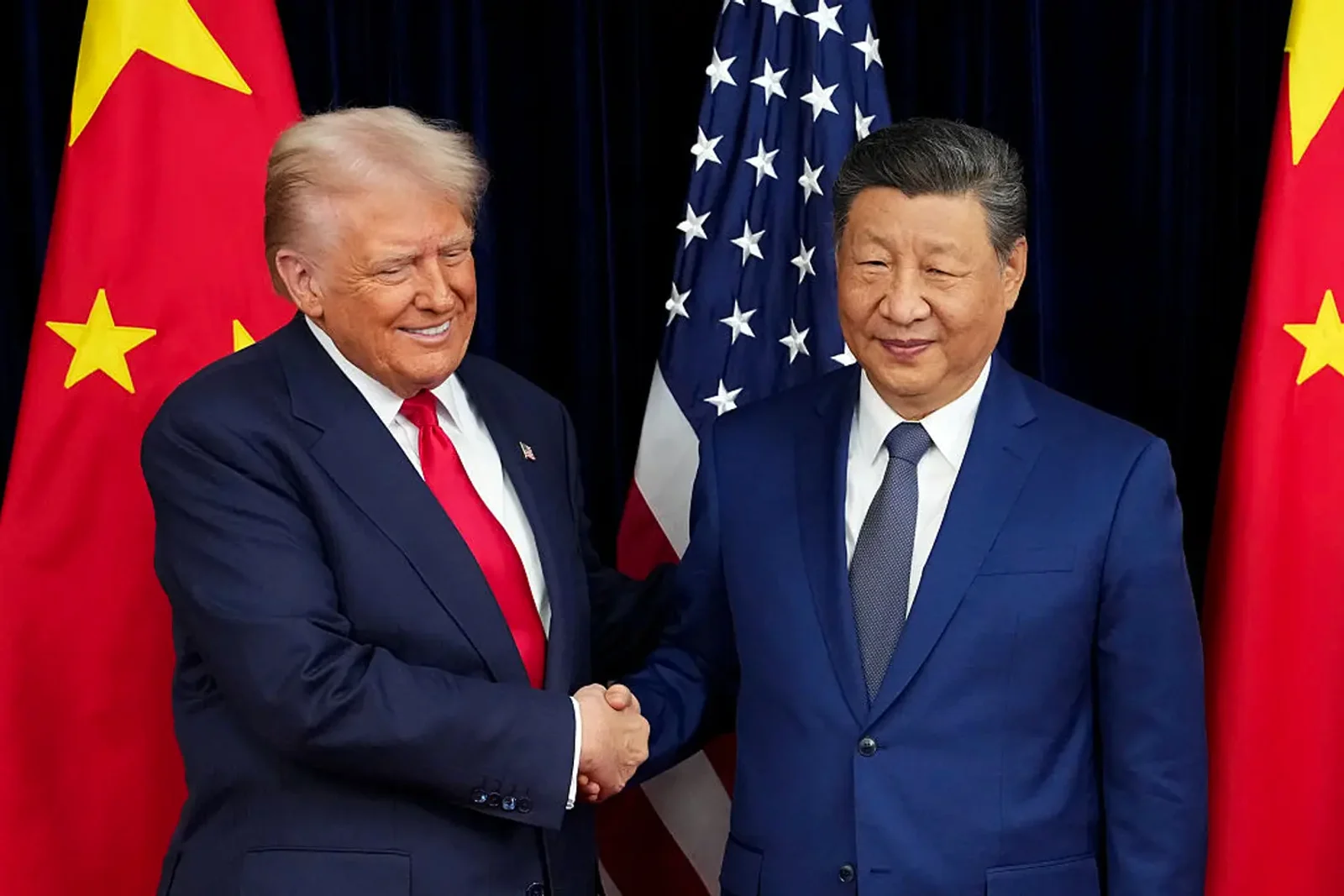
Chinese President Xi Jinping is set to visit the United States from 23 to 25 September at the invitation of US President Donald Trump. Beijing confirmed the state visit on 21 September, saying the two leaders will discuss China-US relations and wider questions of world peace and development.
The official wording is diplomatic. For digital businesses, the practical reading is narrower: AI, trade, tariffs, rare earths and the supply chains behind hardware, cloud infrastructure and consumer technology are moving back into the same conversation.
The Chinese Embassy in Washington published the foreign ministry announcement, saying Xi will pay a state visit to the United States from 23 to 25 September. China's State Council, citing Xinhua, added that the leaders are expected to exchange views on major issues concerning China-US relations and global development.
Why this is not only a politics story
US-China meetings are usually covered through the language of diplomacy. That misses the operational layer. A marketing team, SaaS company or performance business may never negotiate a tariff, but it still depends on the decisions made around semiconductors, cloud costs, payment routes, devices and cross-border platforms.
Three areas matter most.
AI risk and AI access. Ahead of the visit, US Treasury Secretary Scott Bessent said Washington had proposed a notification mechanism for major AI incidents in talks with Chinese officials. AP described the proposal as part of a wider attempt to reduce risk between the two leading AI powers. Axios framed it more simply: an emergency communication line for AI-era incidents.
Tariffs and non-sensitive goods. Reuters reported that the visit follows discussions about the broader trade relationship. AP coverage said US officials had discussed a possible structure for identifying goods that could be treated differently from strategically sensitive technology.
Rare earths and hardware supply. Rare earth minerals remain a pressure point because they sit inside electronics, energy infrastructure, defence systems and parts of the AI hardware supply chain. Even companies far from politics can feel the effect through device prices, component delays or procurement rules.
What marketers should watch
The summit will not automatically change ad performance. It can change the environment around it.
If tariffs ease on consumer goods, device and ecommerce categories may get breathing room. If technology controls tighten, AI tools, chips and infrastructure vendors may face new compliance language. If both sides announce a narrower AI risk channel, vendors will use it as a signal that governments are taking AI incidents seriously enough to formalise communication.
That matters for content because search demand tends to follow the agenda. When a geopolitical event puts AI, trade and supply chains into the same headline, buyers ask more practical questions:
| Search intent | Useful article angle |
|---|---|
| AI regulation | What changes for teams using AI tools across borders? |
| Supply chain risk | Which parts of a digital product depend on China-US policy? |
| Tariffs | What costs can move from hardware into software and marketing budgets? |
| Rare earths | Why physical minerals still affect cloud and AI infrastructure |
| Market risk | How trade news changes campaign timing and budget confidence |
This is where generic news summaries lose value. The reader does not only need to know that Xi is visiting. They need to know which business assumptions should be checked again.
The AI angle is the clearest one
AI is no longer a separate technology vertical. It touches search, recommendation systems, customer support, moderation, fraud detection, creative production and developer tooling.
If the US and China create even a limited incident-notification mechanism, it will not make the AI market safe or cooperative overnight. It would still be a signal that governments are treating AI failures as cross-border events, not only product bugs.
For companies publishing, advertising or building tools with AI, that reinforces a simple rule: document what the system does, where data goes and who checks the output. A polished feature page is weaker than a clear explanation of risk controls. Our piece on why some users are leaving Claude made the same point at product level: the useful question is whether the tool reliably completes the work under real constraints.
What to expect from the visit
The visit is scheduled for 23 to 25 September. AP reported that Trump plans to personally greet Xi at Joint Base Andrews, with talks and a state dinner expected during the programme. Reuters and Chinese official sources describe the agenda more cautiously, focusing on China-US relations and global issues.
That difference in tone is normal. The business takeaway should also stay cautious. A state visit can lower temperature, create working groups or announce selective progress. It can also produce photographs while leaving the hard disputes unresolved.
For markets and operators, the next useful signals are specific: tariff language, export-control language, any AI incident mechanism, rare earth commitments and whether follow-up talks get named owners and dates.
Until then, treat the visit as a planning signal rather than a settled outcome. The headline is diplomacy. The work is checking which assumptions in your product, content and acquisition stack depend on the relationship between the world's two largest economies.
Sources: Chinese Embassy in the United States, China State Council / Xinhua, Reuters via Investing.com, AP, Axios.