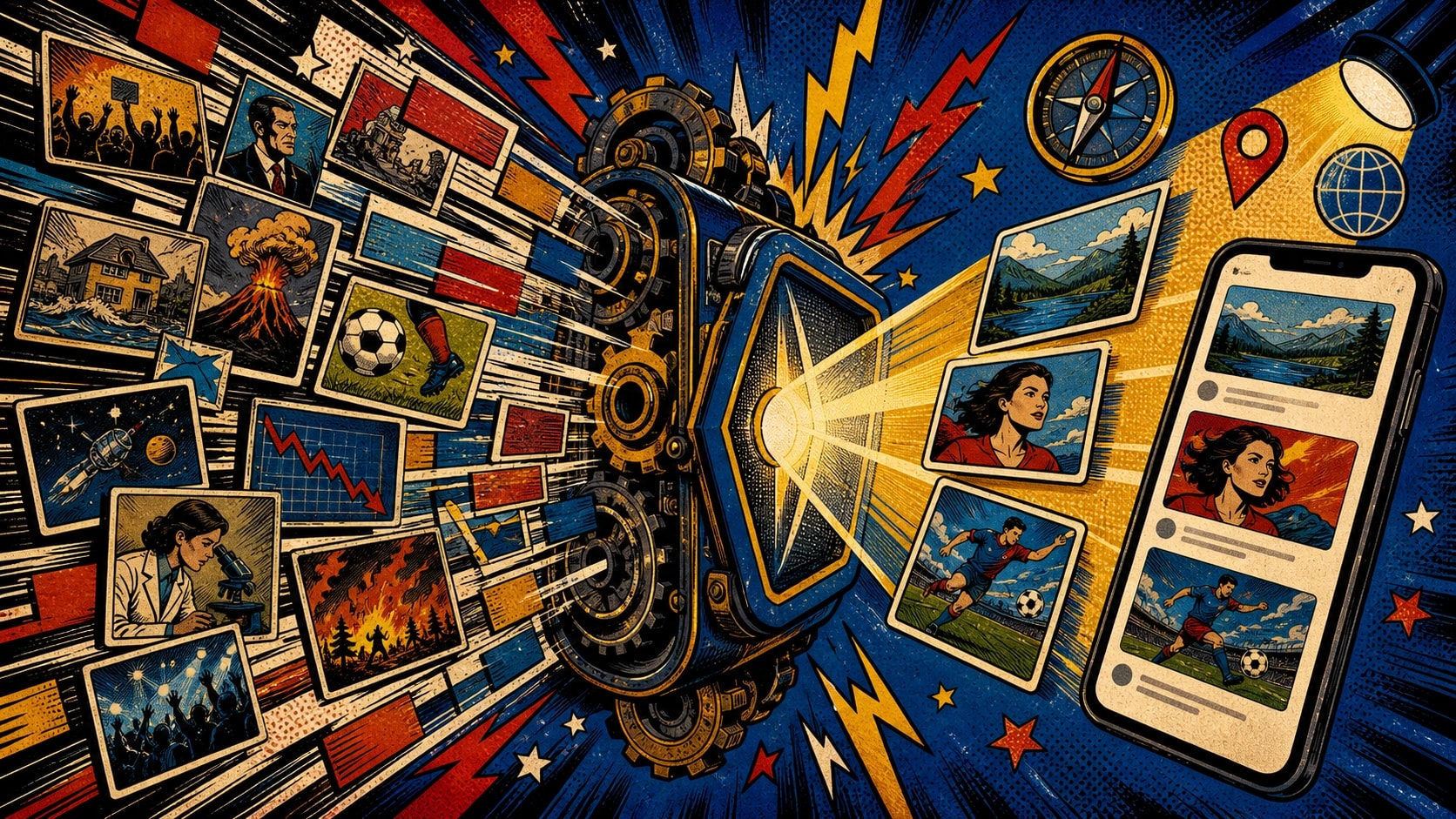
For years, publishers treated Google Discover as search without a query. Make a page indexable, add a large image, wait for Google to find the right audience. That description was never complete, but in 2026 it became actively misleading.
In February, Google released the first separately announced Discover core update. The rollout ran from February 5 to February 27 for English-language users in the United States, according to the Google Search Status Dashboard. Google named three priorities: more locally relevant sources, less sensational content and more original, timely work from sites with recognizable expertise in a subject.
That is not a new checklist to game. It is a clearer description of the kind of publisher Discover now wants to recognize.
Discover is still Search, but it is not ranked like a search result
Google still describes Discover as part of Google Search. A page becomes eligible when it is indexed and complies with Discover policies; no special application or structured-data type is required. Eligibility, however, does not mean distribution. Google makes that distinction explicit in its Discover documentation.
The difference is intent. Search starts with a person expressing a need. Discover starts with a system estimating what may deserve that person's attention before a query exists. A search result can win because it is the clearest answer to a narrow question. A Discover story has to clear a different bar: it must be relevant to an interest, credible enough to recommend and compelling without using deception to manufacture the click.
This is why conventional SEO hygiene is necessary but insufficient. Canonicals, sitemaps and fast pages help Google crawl and understand an article. They cannot create the editorial reason to recommend it.
The 2026 update sharpened three signals
Local relevance now belongs in the editorial decision
Google says Discover will show more content from websites based in a user's country. This does not mean every publisher needs to become a local newspaper. It means a generic global summary has less reason to surface when a source closer to the reader can explain what the same development changes on the ground.
For a small publisher, locality can be useful specificity: how an Android policy changes distribution in one market, how an advertising restriction affects a regulated sector in one jurisdiction, or how an AI feature reaches one language. The geographic angle must add information. Merely inserting a city or country into the headline is not local reporting.
Clickbait is now a larger liability
Discover has always discouraged misleading previews. The 2026 announcement makes the direction unusually plain: reduce sensational content and clickbait. Google's guidance tells publishers not to exaggerate, withhold essential context or use outrage and morbid curiosity as engagement devices.
There is an important distinction between a strong headline and a manipulative one. "Android verification adds a 24-hour step to this install path" makes a clear claim the article can prove. "Android just killed every app outside Google Play" creates a larger emotional promise than the facts support. The first earns attention by being specific. The second borrows attention from a correction hidden inside the story.
Expertise is evaluated topic by topic
The most consequential sentence in Google's announcement is about topical expertise. A site does not need to cover only one subject, but it needs enough depth for Google to understand where its knowledge lives. Google's own example is a local news site with a credible gardening section: expertise can belong to a section even when the whole publication is broader.
That creates an opening for small editorial sites. They do not have to imitate the publishing volume of a national newsroom. They need a coherent body of work that makes their competence legible. One excellent article can appear in Discover, but a connected series gives systems more evidence about what the source consistently knows.
Why publishing 50 generic articles will not solve this
The temptation after an update is to turn its signals into production quotas. Publish every day. Expand every article. Cover every trending subject. None of those actions establishes expertise on its own.
Google's guidance on people-first content asks whether a page contains original information, reporting, research or analysis and warns against producing large amounts of content mainly to attract search traffic. Discover's update points in the same direction.
A small publication is better served by twelve connected articles that contain real judgment than fifty interchangeable summaries. Depth is not word count. It can be a primary-source timeline, an original comparison, a market-specific consequence, a tested workflow or a conclusion that follows from evidence the reader can inspect.
The practical test is simple: remove the publication's logo. Is there still a reason this article had to come from this publisher? If not, the page adds volume, not authority.
The image is part of the recommendation
Discover is a visual surface, and Google now gives unusually concrete image
guidance. The preferred image should be relevant, compelling and at least 1,200
pixels wide, with more than 300,000 total pixels. Google recommends a landscape
16:9 composition, an indexable image URL and permission for large previews through
max-image-preview:large. The image can be identified through og:image or
article structured data.
Two details matter beyond dimensions. Google advises against generic logos and text-heavy images. A cover should communicate the subject before a reader processes a headline, not repeat the headline as a poster. It should also survive a crop: important information placed at the extreme edge may disappear on another Discover surface.
For small publishers, this is good news. A distinctive visual system is achievable without a photo desk. The standard is relevance and clarity, not visual noise.
What a small publisher should do for the next 90 days
Start by defining two or three subject territories narrow enough to demonstrate real knowledge. For an independent marketing publication, that could mean community distribution, platform policy changes and AI-mediated discovery. Each new article should deepen one of those territories instead of opening a random fourth category.
Then build stories from primary material. Read the policy announcement, release note, court filing, dataset or product documentation before reading ten summaries of it. Link the evidence. Separate what the source states from what the publication infers. An original conclusion becomes more credible when the path to it is visible.
Publish when the article is ready, using the real publication date. Do not backdate pages to simulate an archive or update timestamps without a substantial change. Google uses several signals to estimate a page's date, and inconsistent history is the opposite of the trust a publisher is trying to build.
Finally, create a repeatable quality floor:
- one clear editorial question;
- at least one primary source when the story depends on an external claim;
- a specific conclusion, not a recap ending in "time will tell";
- a relevant 1,200-pixel cover with little or no embedded text;
- a visible date, accurate metadata and a descriptive headline;
- a useful connection to earlier reporting on the same subject.
This is slower than filling a calendar with generic posts. It also produces an archive that can compound instead of an archive that has to be hidden later.
Measure eligibility first, traffic second
There is no switch that confirms a publisher has been accepted into Discover. Google reports Discover performance in Search Console only after a site has received enough impressions to cross its reporting threshold. Until that report appears, publishers should verify the inputs they can control: indexing, image access, large-preview permission, structured data consistency and page experience.
Even after impressions begin, Discover should be treated as supplemental traffic. Google says it is less predictable than keyword-driven search because interests, content formats and recommendation systems change. A spike is not a new baseline, and a quiet week is not automatically a penalty.
The durable objective is not to make every article win the feed. It is to become a source the feed can confidently recommend when the subject and reader align.
The real opportunity after the update
The February update did not close Discover to small sites. It made the bargain more explicit. Google wants less manufactured curiosity and more useful work from sources that repeatedly know what they are talking about.
Large publishers have distribution, staff and history. Small publishers have a different advantage: they can choose a narrow territory, develop a recognizable point of view and publish only when they have something specific to add. In a system evaluating expertise topic by topic, that focus is not a limitation. It is the strategy.