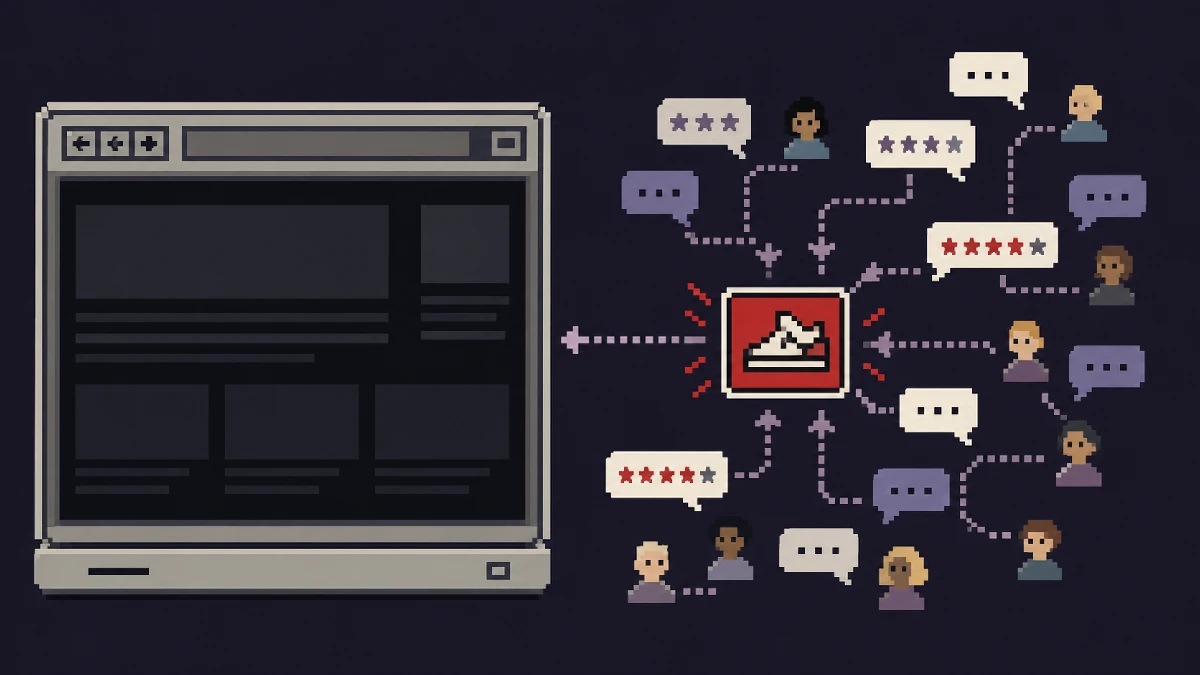
The landing page used to be the center of the funnel. You bought the click, controlled the first impression, handled the objections and pushed the visitor toward one clean button. The page made the case because the visitor arrived before making up their mind.
That order has flipped.
People now arrive after reading a Reddit thread, checking reviews, asking a Telegram group or letting an AI assistant summarize the options. By the time your analytics records the session, the important part of the journey may already be over. The visitor is not asking you to persuade them from zero. They are checking whether the decision they made somewhere else survives contact with your site.
And sometimes they never visit at all.
The decision moved before the click
A landing page is a controlled environment. Every claim is yours, every testimonial is selected by you and every comparison ends with your product winning. That control once made the page powerful. Now it also makes the page less believable.
When someone asks whether a product is worth it, the useful answer rarely lives in the hero section. It lives in the comment that mentions the annoying limitation, the review that explains who the product is not for, and the conversation where several people compare real outcomes. The rough edges are evidence that a human was actually there.
This is why a comment can outrank your homepage. The comment is not necessarily better written. It is simply closer to the question the buyer is trying to answer.
AI turns scattered opinions into one answer
Search used to send people toward sources. AI search increasingly reads the sources and delivers a conclusion. It can compress dozens of pages, reviews and discussions into one recommendation without giving every brand a click.
That changes what visibility means. Ranking a page is still useful, but being present in the evidence behind the answer is more important. If real conversations consistently describe your product as reliable, fast or easy to withdraw from, those ideas become part of the summary. If nobody talks about you, the model has little reason to include you. If the only praise comes from your own domains, the consensus looks thin.
Your brand is no longer represented by one perfect page. It is represented by the pattern that appears across places you do not control.
The landing page still has a job
This does not mean deleting the website. It means giving it a more honest role.
The page should confirm what the visitor already heard. It should make the product easy to understand, answer the practical questions, show the terms clearly and remove friction from the next step. It should give the cautious buyer somewhere solid to verify the story.
What it cannot do is manufacture the story alone.
A sharper headline will not repair a reputation that collapses outside the page. A beautiful comparison table will not help if every independent discussion says the opposite. Conversion optimization begins too late when the buyer has already excluded you before opening the tab.
You cannot attribute the first impression anymore
Analytics still likes a clean sequence: source, session, page, conversion. Real buying journeys are messier. A person can see a recommendation in a private chat, remember a comment from last month, ask an AI assistant for alternatives and finally type your brand name directly.
The dashboard calls that direct traffic. It has no idea which conversation did the selling.
This invisible path is especially important for gambling, crypto and other regulated niches where paid reach is unreliable. When ad accounts keep getting banned, the conversations around the brand are not a soft awareness metric. They are the distribution layer that remains when the rented channel disappears.
Build the evidence before you build the page
Start with the questions people ask when you are not in the room. Is the product safe? Does it pay? Is support real? What happens when something goes wrong? Who is it actually good for?
Then make sure honest answers can exist in public. Give real users something worth talking about. Respond where the audience already compares options. Let criticism stay visible when it is fair, and fix the problems that keep repeating. A balanced discussion does more for trust than a wall of perfect praise.
Most importantly, do not replace absence with fake consensus. Bot comments, disposable accounts and scripted enthusiasm create a pattern too, just not the one you want. Real community presence is slower because it depends on actual experience. That friction is also what makes it defensible.
The landing page is not dead. It has simply lost the privilege of speaking first.
The first impression now belongs to the conversation. The recommendation belongs to the accumulated evidence. Your site gets the final confirmation, if it gets a visit at all.
Build the reputation that reaches the page before the customer does.